travel: power sockets around the world, sockets and power plug by country
All these electronic things need power.... Which one is the right adapter??
The switched power supply units in modern electronics and battery chargers can usually work
with a variety of different voltages and frequencies. Only the plug must
be adapted to fit into the socket.
Laptop PCs can usually work without earth connected. Most laptop power supplies do however use the earth pin for ESD protection. The laptop power supply will have a capacitor
(about 1uF) connected between the minus DC output pin and the Earth pin on the
power plug.
Just use the search function of your browser (crtl-f) to search for the country name and find the right section on this page.
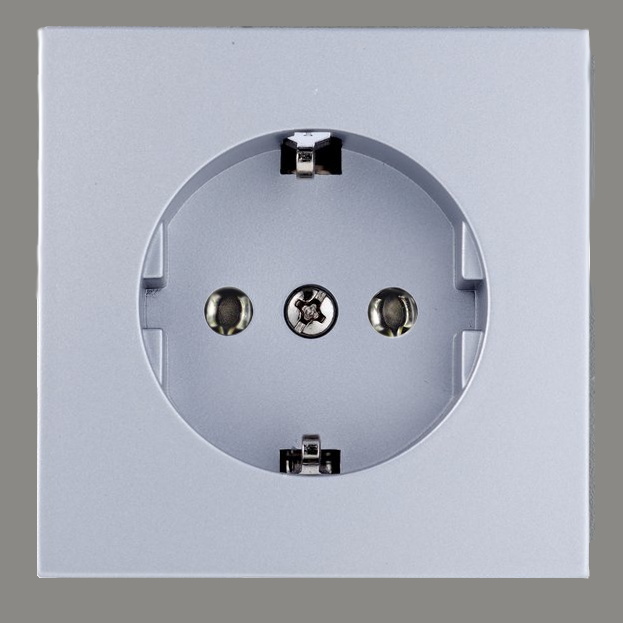
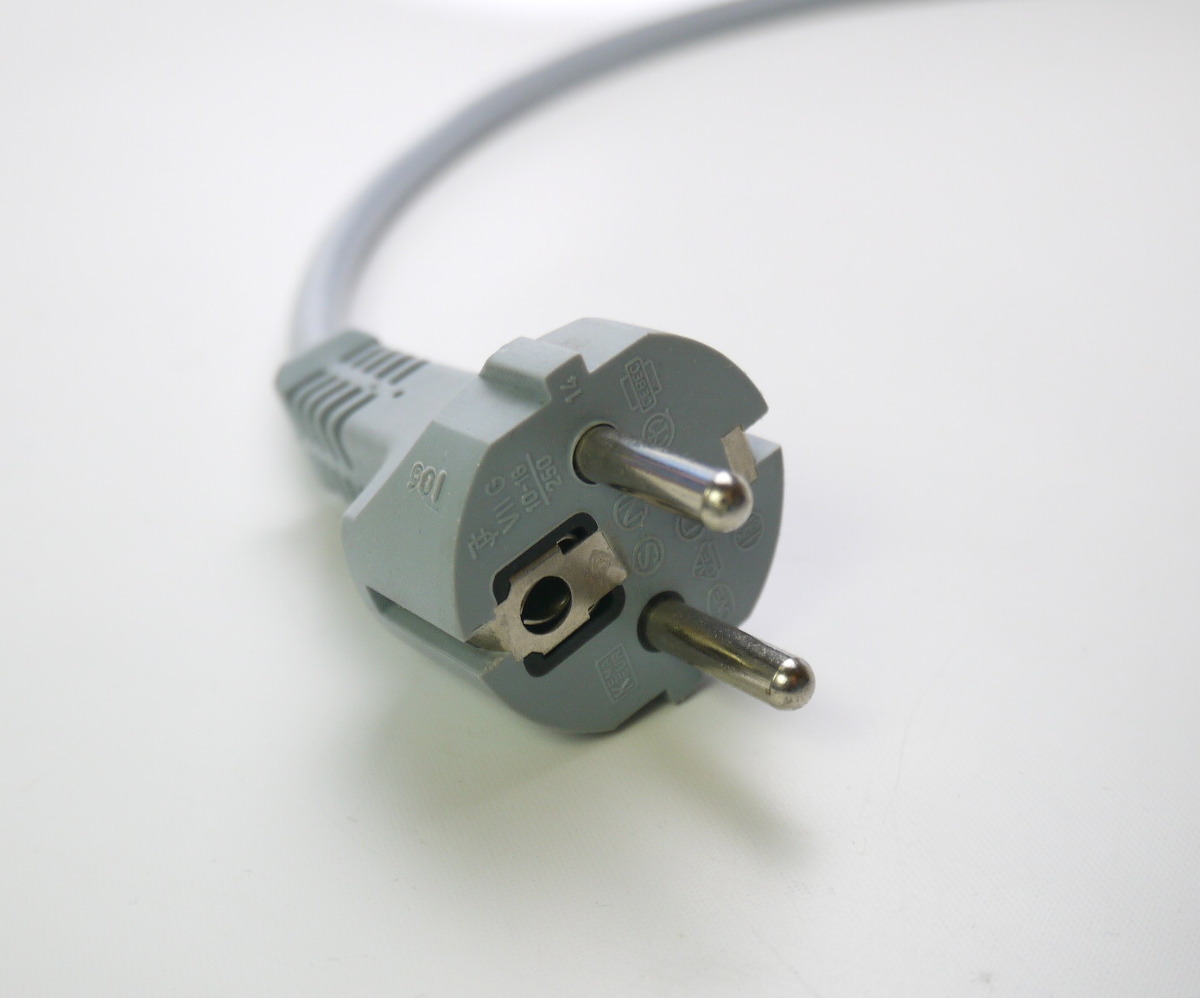
German socket (a.k.a Schuko socket or plug Type-F)
The earth pins are the clips on both sides.
Voltage: 230V AC
Pin spacing: 19mm, pin diameter: 4.8mm
Used in
Afganistan,
Algeria,
Austria,
Bulgaria,
Croatia,
Finland,
Germany,
Greece,
Hungary,
Netherlands,
Norway,
Portugal,
Serbia,
Spain,
Sweden,
Turkey.
Russia and the former Soviet Republics use a similar kind of plug but the diameter of the contacts is 4.0 mm.
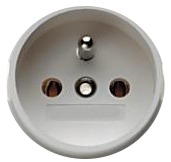
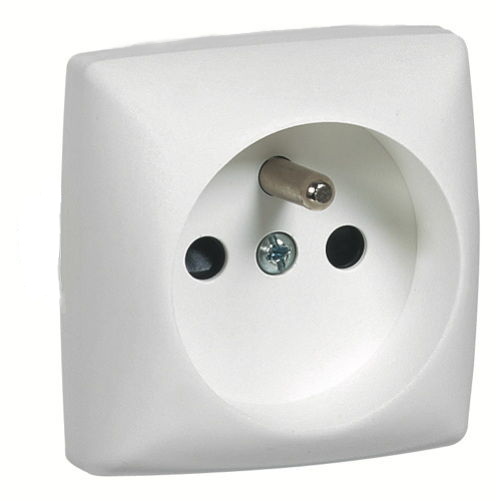
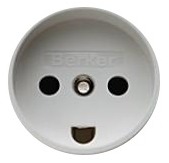
French socket (plug Type-E)
In France the power socket is similar to the German type except that the earth pin
is coming out of the socket.
Voltage: 230V AC
Pin spacing: 19mm, pin diameter: 4.8mm
Used in
Belgium,
Burkina-Faso,
Burundi,
Cameroon,
Congo,
Czech-Republic,
France,
Liberia,
Marocco,
Martinique,
Poland,
Slovakia,
Tunisia
.
You can get plugs which will fit in Germany and France and still
have a proper earth connection. They have contacts on the sides
for the clamps and also take the French earth pin:
Denmark, Greenland, plug Type-K
Similar to the French connector but the earth pin goes in.
Voltage: 230V AC
Pin spacing: 19mm, pin diameter: 4.8mm
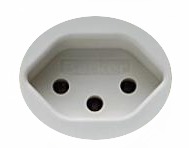
Earth is the pin in the middle, slightly off center.
Voltage: 230V AC
Pin spacing: 19mm, pin diameter: 4.0mm
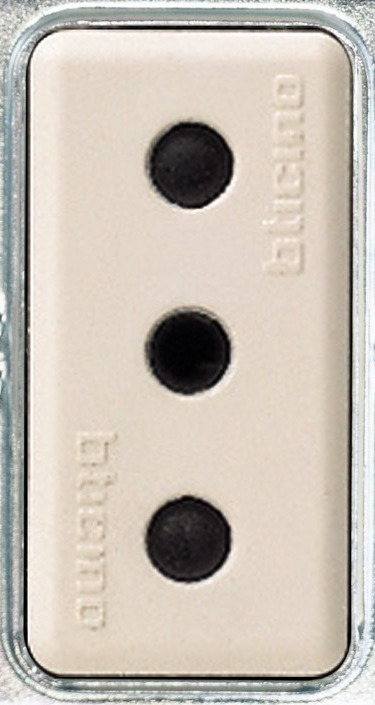
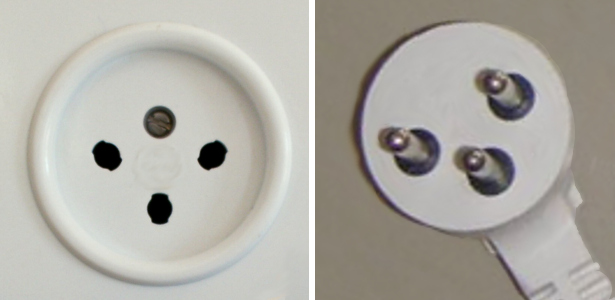
Italy, Chile, plug Type-L
Earth is the pin in the middle.
Voltage: 230V AC
Pin diameter: 4.0mm
Most of Europe (mainland Europe), plug Type-C
The main difference between all the European plugs is the earth pin (and the pin
diameter). The voltage
is everywhere 230V AC. It is therefore possible to build a travel adapter which will
fit in all those counties in mainland Europe as long as no earth connection
is needed.
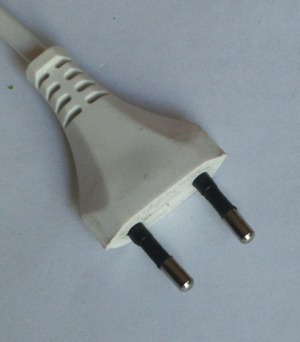
There is even a plug called "Europlug" which will fit in all the European
wall outlets except Britain/Ireland/Cyprus/Malta. The pin diameter is 4mm and it
can be bent a tiny bit such that it creates a reliable contact in sockets
made for 4.8mm pins. The pin spacing is 19mm (measured center to center). The plug has pins with
insulating sleeves to improve the safety when used with sockets that are not receded.
Europlug, aka plug Type-C
Counties where such a generic Europlug without earth pin will fit are:
Algiers,
Angola,
Aruba,
Austria,
Bangladesh,
Belgium,
Bolivian,
Bosnian,
Brazil,
Bulgaria,
Cameroon,
Chile,
Colombia,
Croatia,
Czech Republic,
Denmark,
Ecuador,
Egypt,
Estonia,
Finland,
France,
Gaza,
Germany,
Greece,
Greenland,
Hungary,
Iceland,
India,
Indonesia,
Iraq,
Iran,
Israel,
Italy,
Jordan,
Kongo,
Latvia,
Lichtenstein,
Lithuania,
Luxembourg,
Madagascar,
Mallorca,
Marocco,
Martinique,
Mauritius,
Namibia,
Nepal,
Netherlands,
Norway,
Pakistan,
Philippines,
Poland,
Portugal,
Rumania,
Russia,
Serbia,
Slowakia,
Slowenia,
Spain,
Sri Lanka,
Sudan,
Sweden,
Switzerland,
Syria,
Tahiti,
Thailand,
Togo,
Tschad,
Tschechenia,
Tunisia,
Turkey,
Ukraine,
Urugay,
Vietnam,
West Bank,
Zaire
High power connections in Europe
Most houses in Europe connect high power devices such as saunas, kitchen stove, etc... to
"high power outlets". Those have 380V/400V @ 50Hz with 3 phases. The voltage between
phase and neutral is 220/230V. Domestic appliances have usually no connector for this. Cables
are screwed directly to a small connection box in the wall.
Israel, the West Bank and Gaza, plug Type-H
The earth pin is the third pin at the bottom.
Voltage: 230V AC
Pin spacing: 19mm, pin diameter: 4.5mm
The pins on the connector used to be slightly flat before 1989. Most wall sockets
are now made such that they accept both the older flat connector pins and the new
round ones.
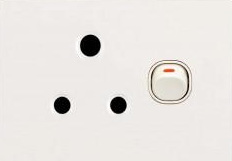
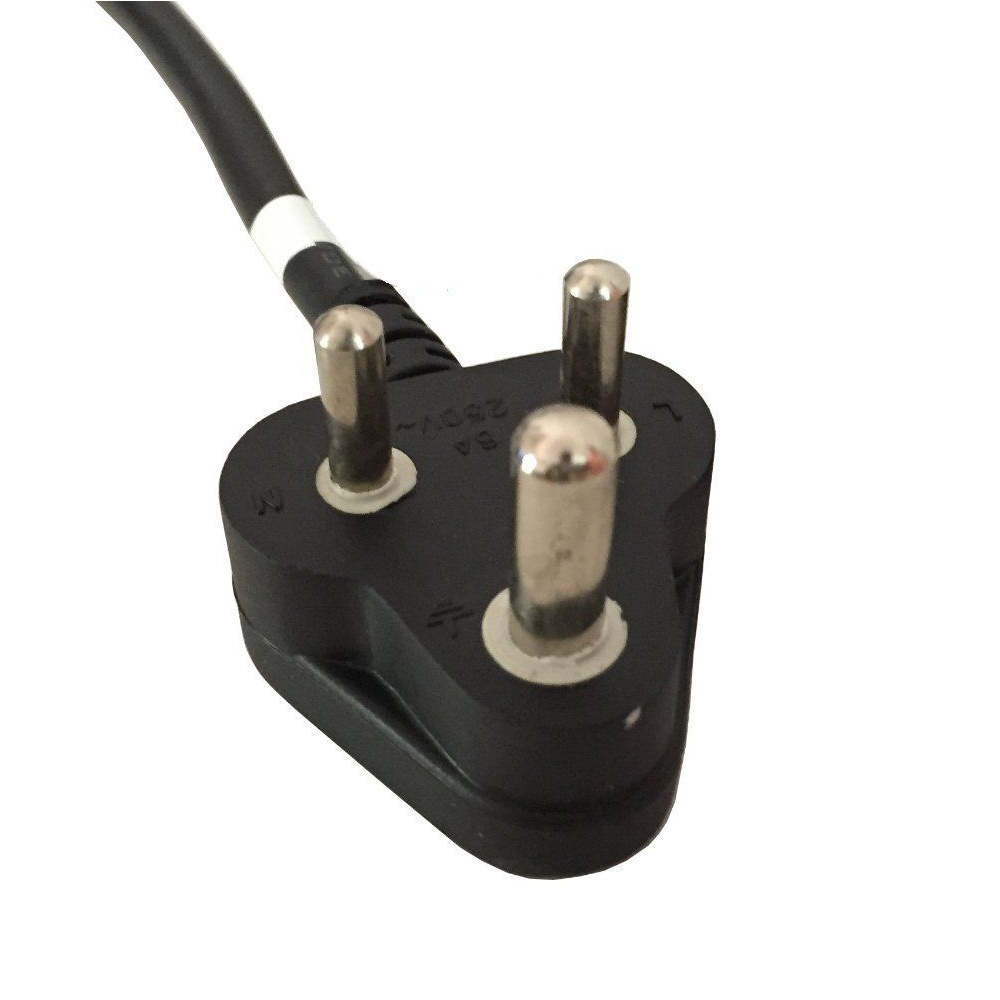
India, plug Type-D
This plug was originally known as British Standard 546 but it is no longer used
in Britain. The two pin Euro-plug will fit into this socket however some
sockets may have a locking mechanism which closes the opening for
the line pins unless something is inserted into the earth connector. The earth pin has a quite wide diameter of 7.1mm and you can unlock the opening for the line pins by inserting a dull pencil or a slim plastic ball pen into the hole for the ground. This allows you to insert a Euro-plug even into sockets with such a shutter mechanism.
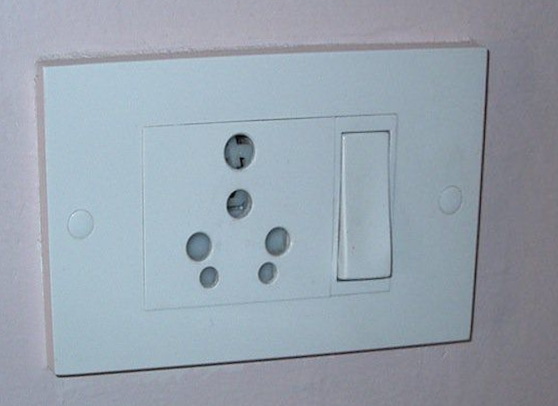
Note that there is
also a very similar socket known as Type-M which has much wider pin spacing and pins of a larger
diameter to provide more power (rated for higher currents). There are some
strange looking sockets with 6 holes in total that can take both the Type-D and
the Type-M plug as seen in the picture below:
Combined type-D and type-M socket A Euro-plug would fit into the two bottom holes and you would have to push something into the earth pin hole (center second from top) to unlock the protective plastic shutters covering the holes.
You can usually switch on and off the socket with the little switch
next to the socket.
Voltage: 230V AC
Type-D pin spacing: 19mm (center to center), neutral and "hot" pin diameter: 5.1mm,
earth pin diameter: 7.1mm
Counties which have this type of power socket are:
India, Sri Lanka, Nepal, Pakistan.
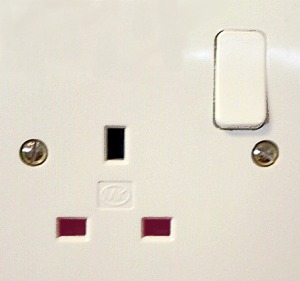
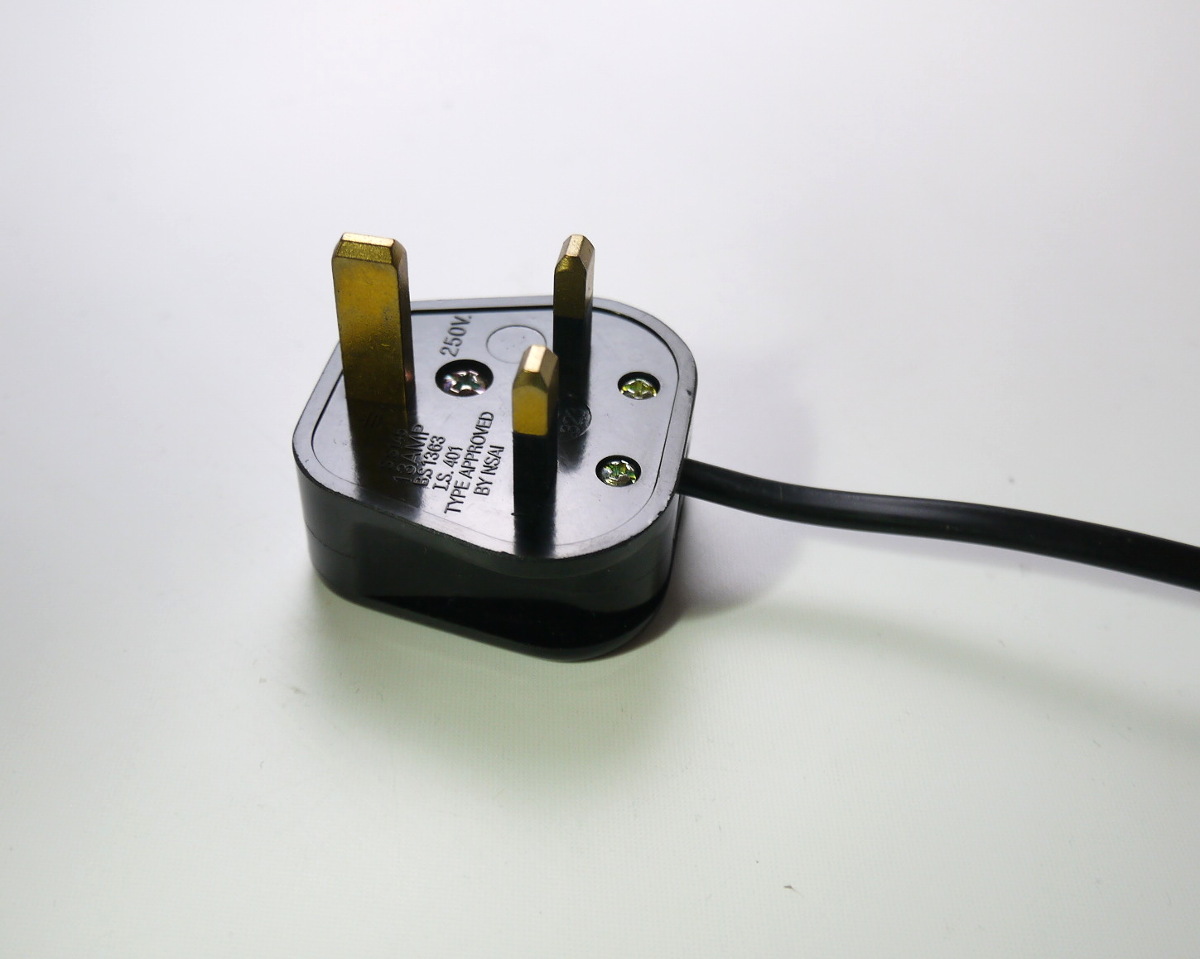
United Kingdom, Great Britain, British 3-pin, Commonwealth plug, BS-1363 plug, plug Type-G
The plug pins the UK the are rectangular and there are mandatory shutters which
close the opening for the line pins unless something is inserted into the earth
connector hole. The earth pin on the plug is longer than the other pins and it
will therefore insert first.
You can usually switch on and off the socket with the little switch
next to the socket.
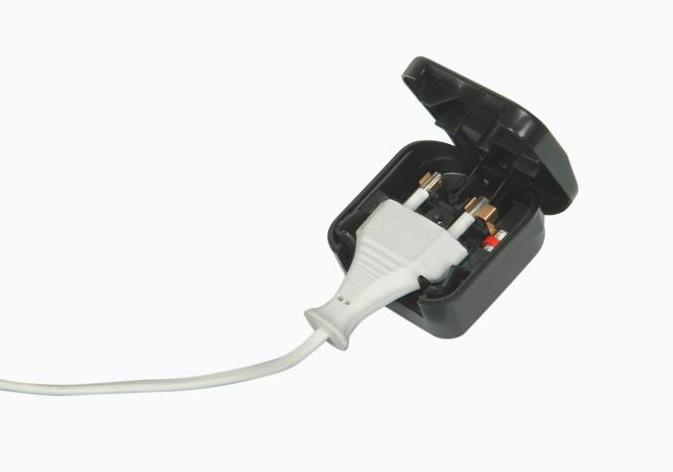
An interesting curiosity is the Europlug to BS-1363 conversion plug. This is not
a travel adapter but a proper permanent plug where the lid is fastened with a
screw. It converts
appliances with the popular Europlug into BS-1363.
Europlug to BS-1363 conversion plug
Voltage: 240V AC, slightly higher than in mainland Europe but compatible.
Counties which have this type of power socket are:
Bermuda,
Great Britain/United Kingdom (England/Wales/Scotland/Northern Ireland),
Ghana,
Gibraltar,
Great Britain,
Hong Kong,
Ireland,
Isle of Man,
Katar,
Kenia,
Kuwait,
Malta,
Malaysia,
Oman,
Saudi Arabia,
Scotland,
Seychellen,
Singapore,
Uganda,
Wales,
Cyprus
Australia and New Zealand, plug Type-I
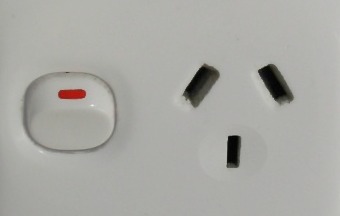
This is a power socket with flat pins and they have an angle.
Voltage: 240V AC
Counties which have this type of power socket are:
Argentina,
Australia,
New Zealand,
Papua New Guinea,
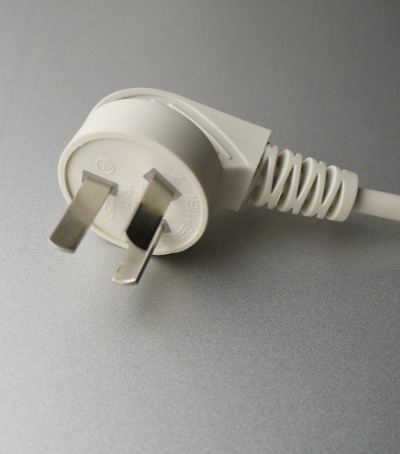
Mainland China, plug Type-I
The connector is almost idential to the Australian connector. The pins are just
slightly longer (about 1mm) and there is normally no switch.
Voltage: 230V AC @ 50Hz
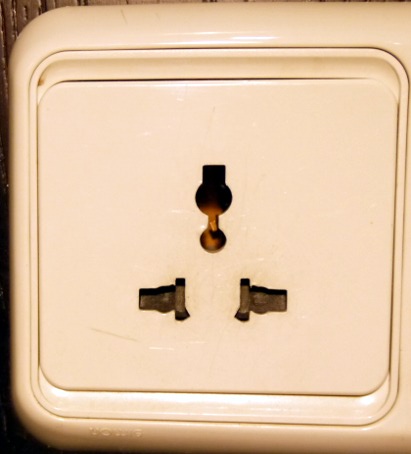
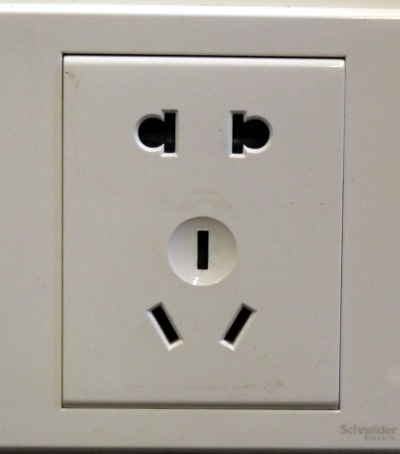
Allmost all hotels have the quite common multiplug socket which will take the mainland china plug
and US/European connectors. Different versions of this multiplug socket exist. Some can accomodate foreign plugs with 3 pins but all of them take at least the two pin connectors. People from
Japan or North America should be aware that the voltage is 230V even if their
connector fits into such a multiplug socket.
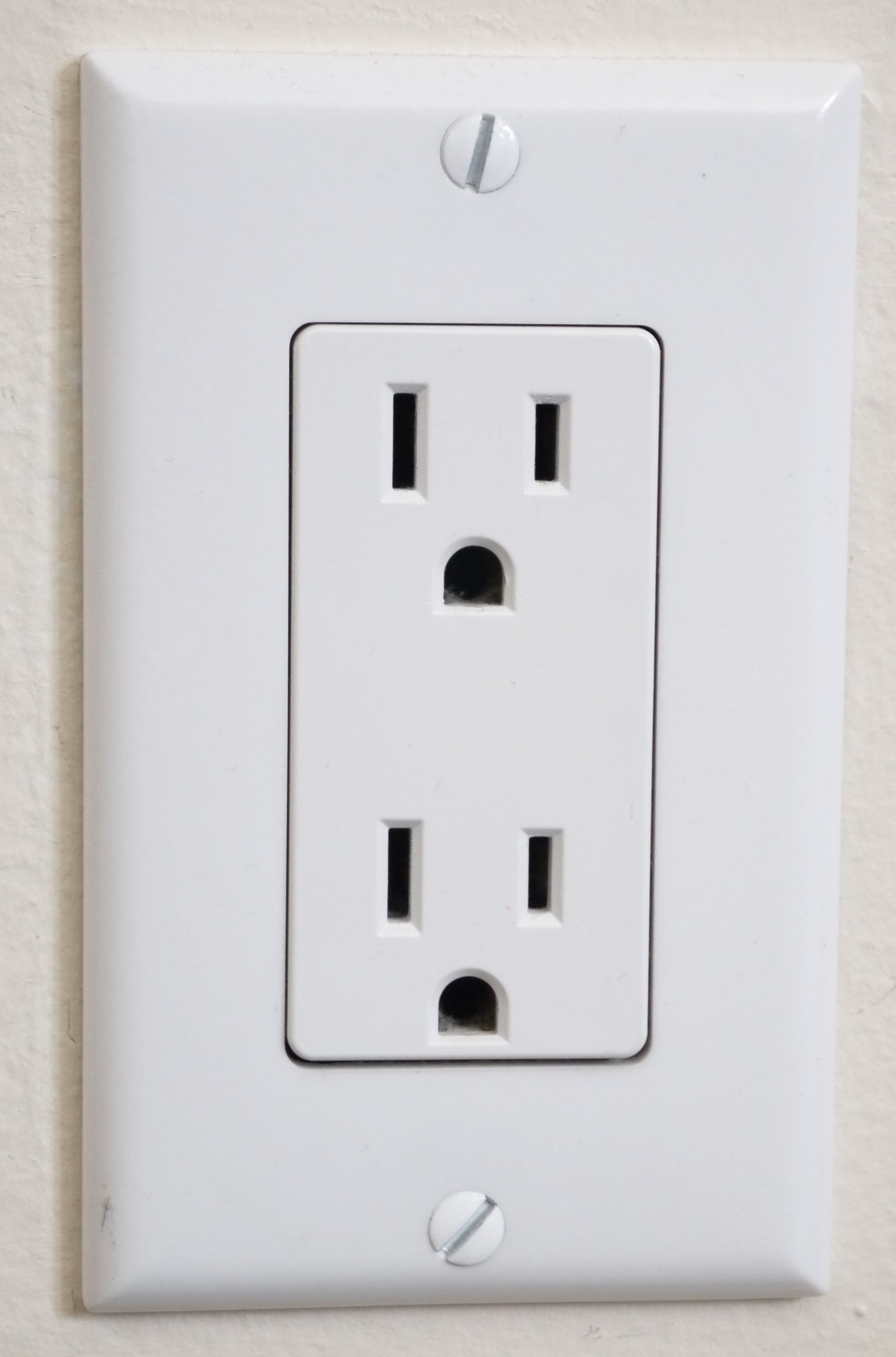
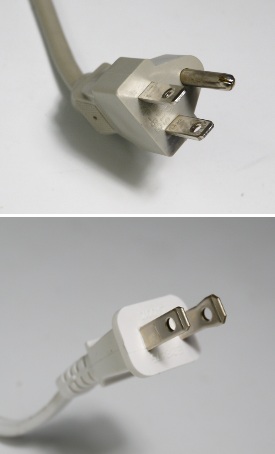
USA/Canada (North American socket, NEMA-1=plug Type-A, NEMA-5=plug Type-B)
The prongs on the US power socket are flat and parallel. The earth pin is longer
and round.
The plug has one prong which is slightly wider such that even two prong plugs can not be reversed.
The more narrow prong is "hot" wire and the wider one is neutral.
However on plugs with earth you will normally find that the flat pins
have the same size. This makes it strictly speaking a Japanese plug.
Two prong plugs are known as NEMA-1 plugs and plugs with the additional ground
connection are NEMA-5 plugs.
Voltage: 120V AC (previously 110V AC), Frequency: 60Hz
Spacing between the slots: 12.7mm (1/2 inch) center to center, Round earth
pin diameter: 3/16-inch (4.763mm), Flat prongs: 1/16inch thick x 4/16 inch wide
x 10/16 inch long
The wider neutral prong is 5/16 inch wide instead of 4/16 if the plug is coded
to prevent reverse insertion.
Counties which have this type of power socket are:
Canada,
Costa Rica,
Dubai,
Dominican Republic,
Ecuador,
Guatemala,
Haiti,
Hawaii,
Honduras,
Jamaica,
Japan (similar to North America but pins have equal width),
Mexico,
Nicaragua,
Panama,
Philippines,
Puerto Rico,
Taiwan,
USA,
Venezuela
The Japanese plug has two identical flat prongs, whereas the US plug has one
prong which is slightly wider. US plugs with such coded prongs will not fit into Japanese sockets.
The North American socket is not receded. This has two consequences: small children may
be tempted to pull the plug out of the socket by reaching past the end of the
insulation towards the pins since their small fingers can get a good grip there. They
can easily get electrocuted when touching the pins. This is mitigated by
the low voltage of only 120V AC which will rarely cause death.
A second problem related to this is that small metal objects such as e.g a paper clip could
fall along the wall onto the contacts and cause a short circuit between the neutral
and the hot prong. This is mitigated in recent installations by installing the socket such that
the ground pin is pointing up-wards.
The NEMA-5 socket is overall a very safe socket. There are other countries which
have much worse sockets.
Recent installations have the earth pin up.
The North American power socket has an advantage over all the other power
sockets and plugs in terms of size. It's the most compact one.
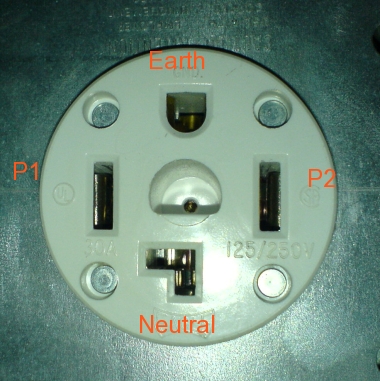
High power connections in North America (NEMA-14)
High power connections are used with ovens in the kitchen and dryers for clothes. Note that
the plugs for dryers and kitchen-ranges are different but both of them have
240V.
They have 2 phases and 240V @ 60Hz between the phases (120 Volt phase to neutral).
The voltage could vary between 220V and 250V dependent on the grid load.
Most European washing
machines are able to connect there with no problem (no need for a transformer).
A small number of European washing machines might have problems with the 60Hz if they have an
asynchronous motor, e.g for the pump, built to work at 50Hz. Note
that there are no ready made adapters available for this. Most
Americans or Canadians will not even know that they have voltages
suitable for European appliances in their houses. You can get the plug
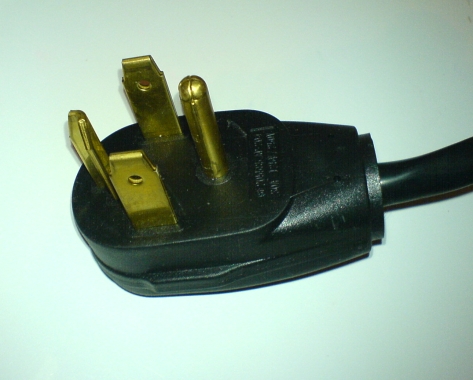
(dryer replacement cords) in many shops. Those are heavy cables with
copper wires of about 2mm diameter. To build an adapter you would need
to bring a socket from your home country that is capable of taking such
heavy wires. For the connection use pins marked P1 and P2 in the below
picture. The earth pin connects to the earth pin of your socket. Neutral
is not connected. Be careful! Playing with high power connections can be
fatal if you don't know what you are doing.
Dryer outlet USA/Canada
The corresponding high power dryer plug (it's large and heavy).
Disclaimer
There is no guarantee that the information on this page is correct.
Some countries might also have two types of wall sockets for historic reasons.
Contact me, suggestions and photos
Take a photo of a plug and a power socket while you are on vaction and send it
to me.
You can contact me via email at: